
Winter in Pakistan isn’t one thing. A December morning in Lahore or Islamabad is a different problem from a December afternoon in Karachi, and both are different again from a wedding in Swat. So “what should I wear this winter” has more than one right answer, and a lot of shops will sell you a heavy fabric you don’t actually need.
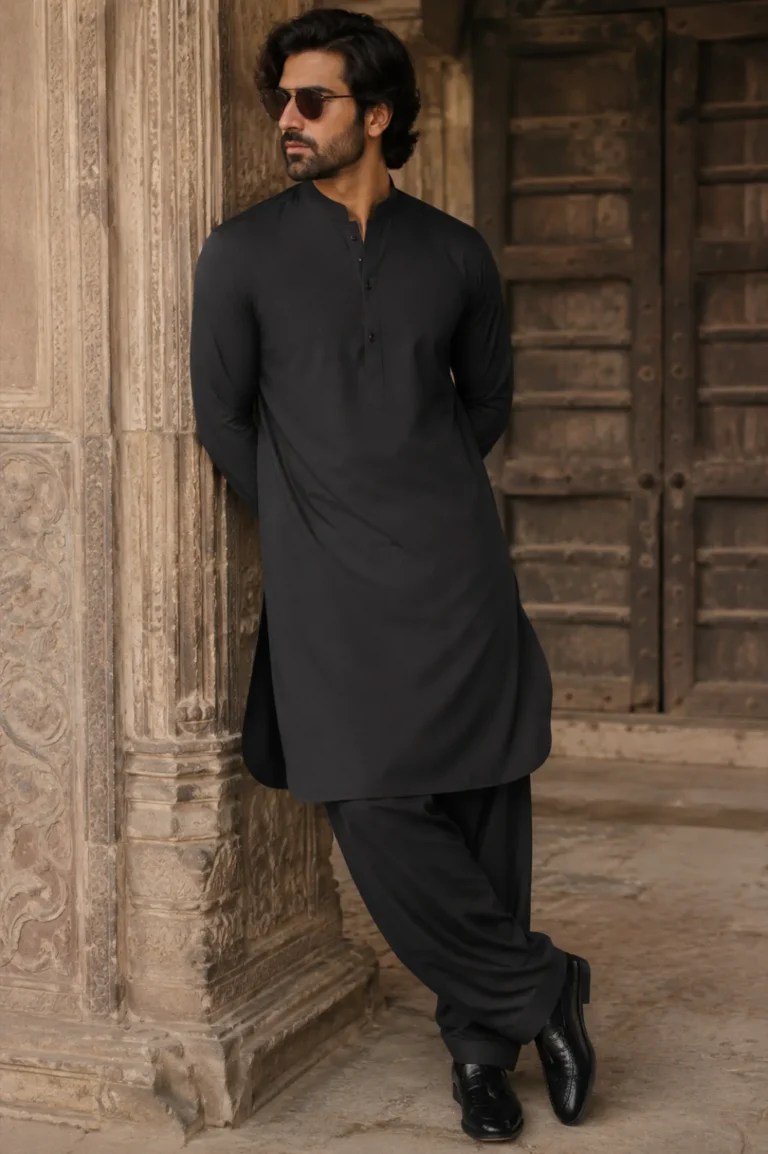
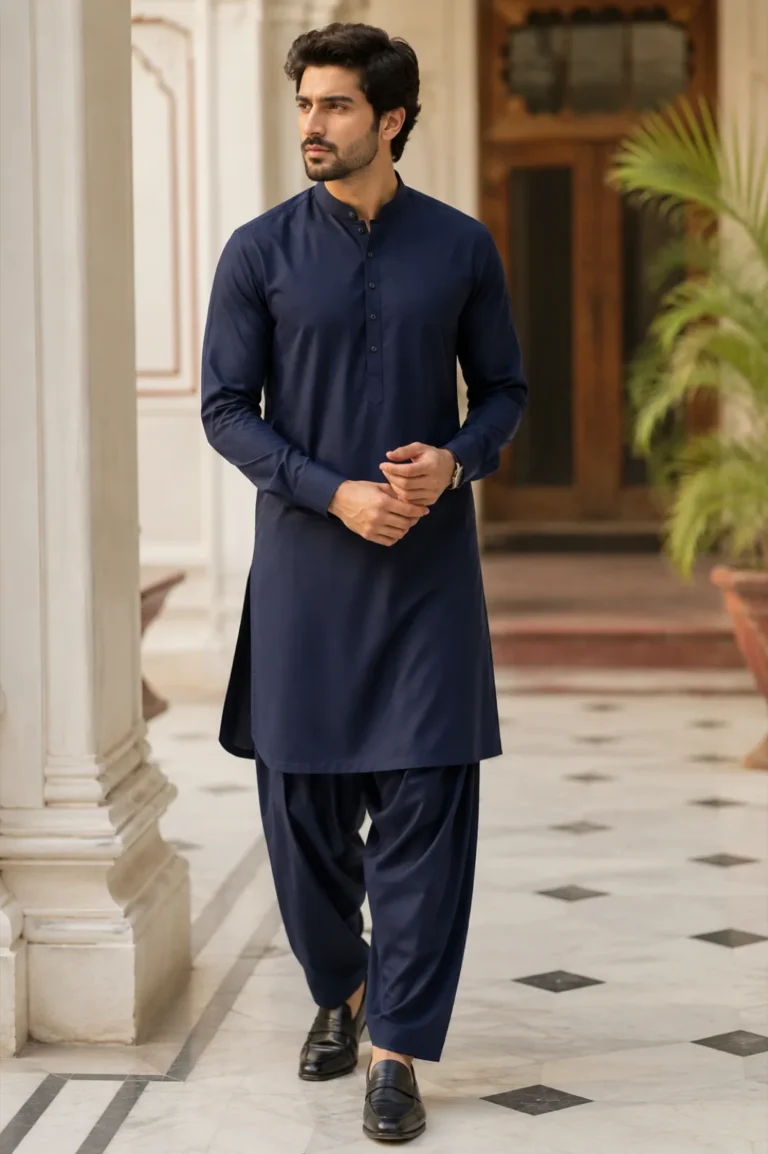
The short answer: for most cities in the plains, a heavier wash and wear or a premium blend (about 180–200 g/m²) under a waistcoat or shawl is enough for daily wear and weddings. Light summer cotton belongs in the cupboard until March. If you’ll be outdoors for hours in real cold, buy a true winter fabric such as khaddar, karandi or a wool blend. We don’t make those, and we’ll say so below.
How cold does your winter actually get?
Before choosing a fabric, be honest about where and how you’ll wear it:
- Karachi and the coast: mild winters. Most days you’ll be comfortable in a mid-weight wash and wear. Heavy fabrics will feel too warm indoors.
- Punjab and the plains (Lahore, Faisalabad, Multan): cold, foggy mornings and nights from about mid-December to January. A mid to heavy fabric plus a layer works well.
- Islamabad, Rawalpindi, Peshawar: colder nights and longer winters. Layering matters more than the fabric itself.
- The north and the hills: real cold. No shalwar kameez fabric on its own is enough. You need a wool fabric, a thermal layer and a proper coat or shawl.
Also ask: will you mostly be indoors with heating, in an office, at a wedding hall, or outside? A heated hall in January can feel like April.
The winter fabrics you’ll hear about in the market
| Fabric | What it is | Best for |
|---|---|---|
| Khaddar | A thick, coarse cotton weave with a rough, handloom-style feel | Everyday winter wear, casual and traditional looks |
| Karandi | A textured, heavier fabric, often a blend, with a slightly rough hand | Smart winter wear when you want texture |
| Wool and wool blends | The warmest option, usually sold as suiting or premium shalwar kameez fabric | Cold cities, formal winter events |
| Winter wash and wear | A heavier polyester-cotton or polyester-viscose blend, easy to wash | Office, daily wear, travel |
| Boski | A traditional silk-based fabric with a soft sheen | Special occasions, often in cream or white |
None of these is “the best”. Each solves a different problem. If you want a deeper look at two of them, read Latha vs Wash & Wear and our boski guide.
Where SHA LIBAS fabrics fit in winter
We make three fabrics. Here is how each one does from November to February, honestly.
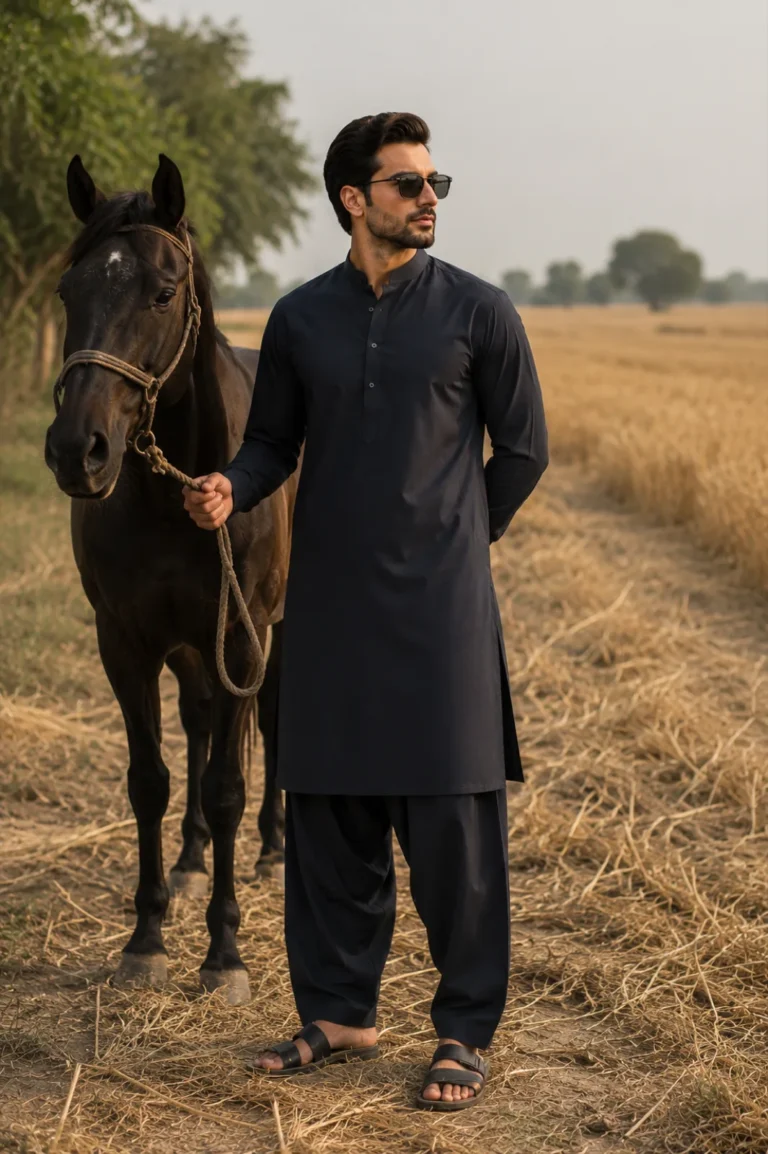

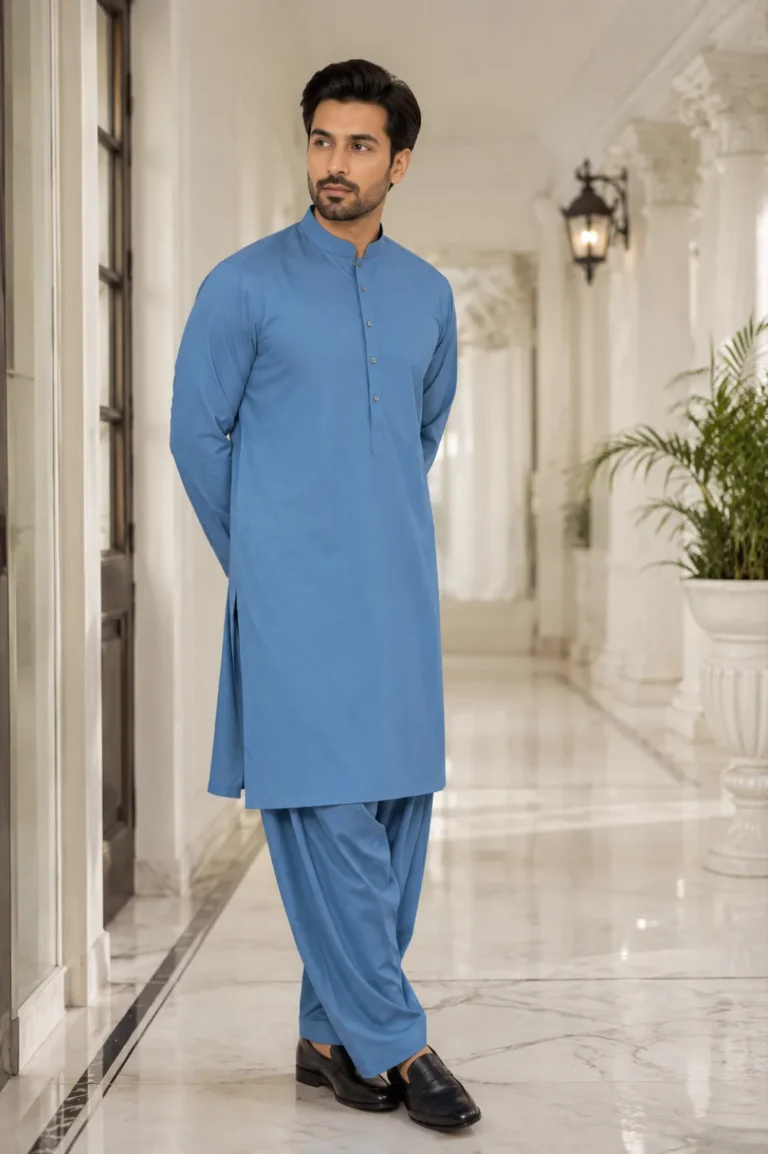
Grace: our best winter choice
Grace is a polyester-viscose blend at about 200 g/m², our heaviest fabric. It isn’t a wool, so it won’t keep you warm on its own outdoors, but its weight and close weave make it feel more substantial than summer fabrics and it holds a clean line under a waistcoat or shawl. It’s the one we’d pick for winter weddings, dinners and Friday prayers in cold weather. PKR 3,500 for 4.5 metres.
Wash & Wear: the practical daily winter fabric
Wash & Wear is about 60% polyester and 40% cotton at around 180 g/m². It blocks a breeze better than light cotton, and it has one big winter advantage: it dries fast. When clothes take two days to dry on a foggy line, that matters more than people expect. PKR 2,800 for 4.5 metres.
Cotton: keep it for summer
Our Cotton is a light 150 g/m² summer fabric, made to let heat out. In a Karachi winter or a heated office it’s fine with a layer on top, but for a Lahore or Islamabad winter it’s the wrong tool. We’d rather tell you that than sell you the wrong suit.
Layering does most of the work
In the plains, a good layer matters more than a heavy fabric. A few things that help:
- A waistcoat. It keeps your chest and back warm and makes any kameez look more formal. If you’re ordering a 3-piece, you’ll need extra fabric; see our meters chart for 2 and 3 piece suits.
- A shawl or chadar. The traditional answer, and still the most flexible: on in the morning, off in a heated hall.
- A thin thermal or vest underneath. Ask your tailor to cut the kameez a little easier through the chest so a thermal doesn’t pull the fabric.
- Full sleeves and a proper collar. A band collar or shirt collar keeps the wind off your neck better than an open neckline.
Our tailoring guide lists the measurements to give your tailor.
Winter colours
Darker, warmer colours read right in winter light and hide everyday wear better. Good picks from our range:
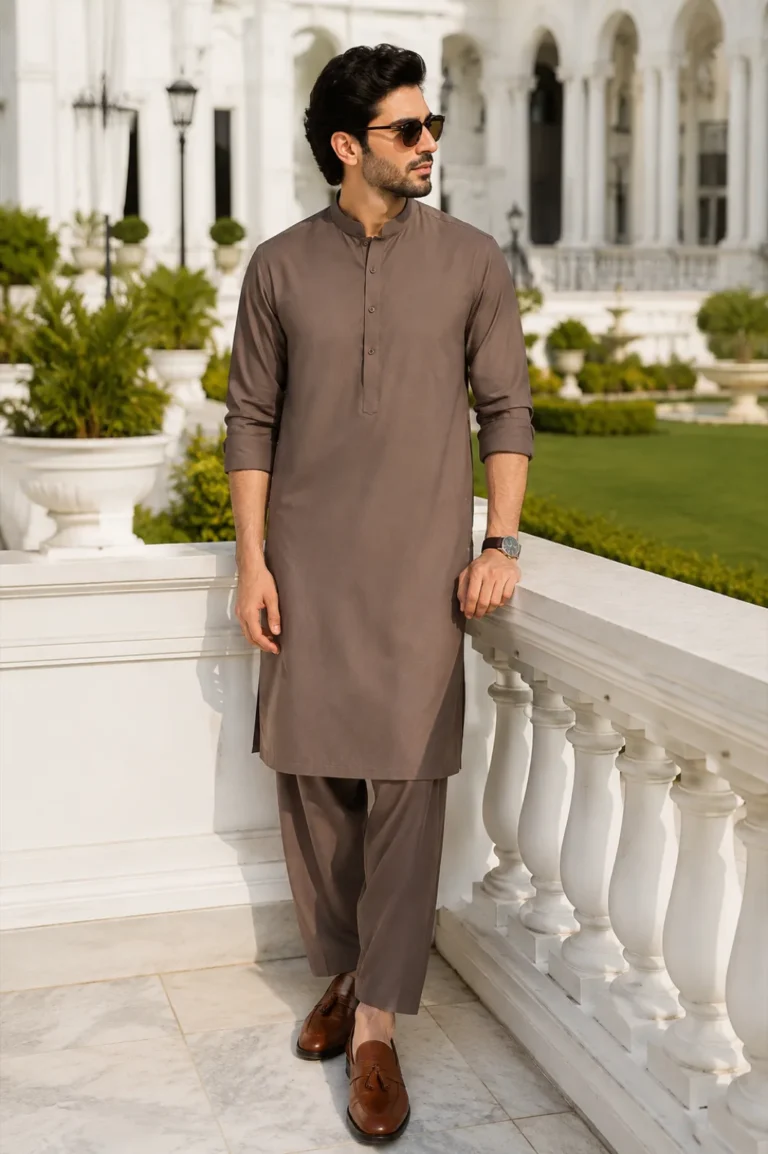
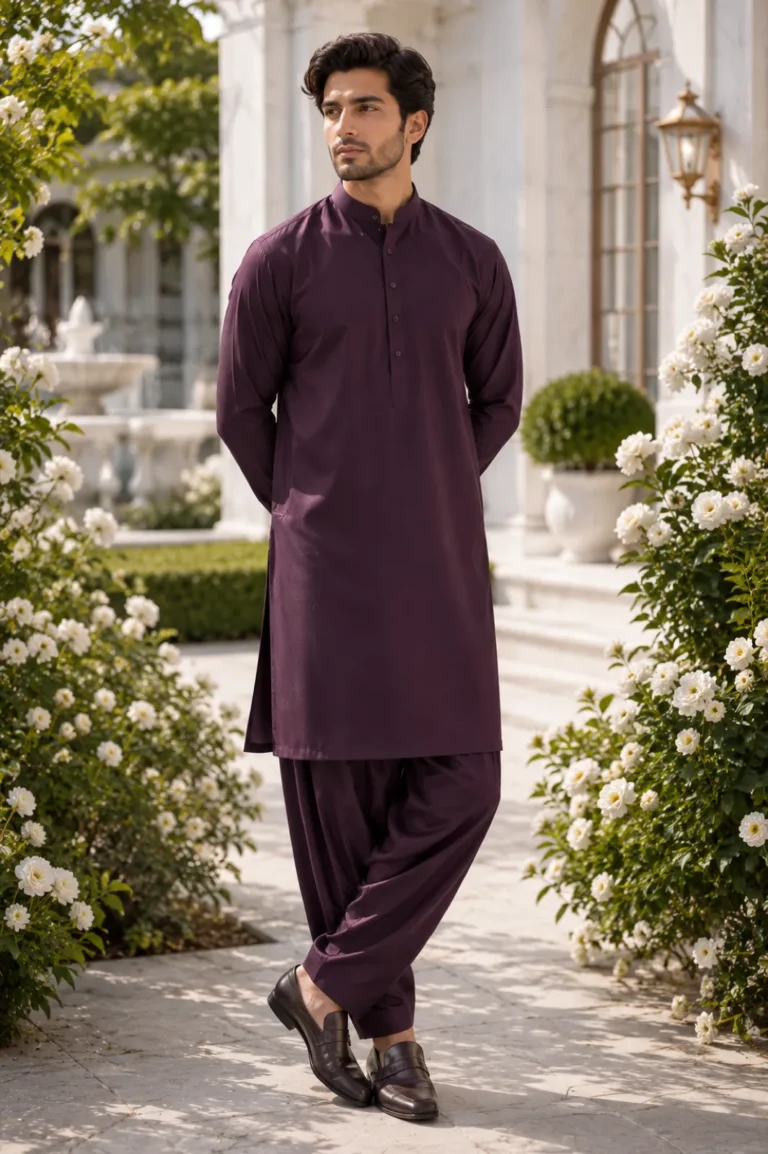
- Grace Charcoal Grey and Grace Navy Blue for weddings and dinners
- Grace Jet Black and Grace Coffee Black for evening events
- Grace Dark Camel and Grace Wine Red if you want warmth without black
- Wash & Wear Smoky Charcoal and Wash & Wear Camel Brown for daily wear
Looking after fabric in winter
- Wash in cold or lukewarm water. Hot water is what makes blends go shiny and pill.
- Hang it straight away, indoors if it’s foggy. Wash and wear will usually be dry by the next morning.
- For Grace, dry-clean the first wash to set the weave, then wash gently in cold water.
- Store suits on hangers, not folded under heavy sweaters, so creases don’t set.

Our care guide covers each fabric in detail.
When to buy somewhere else
If you’ll spend long hours outdoors in Murree, Swat, Quetta or anywhere with real cold, buy a wool or wool-blend fabric, or a good khaddar, and wear a proper coat. A premium blend like Grace looks great at a winter wedding, but it isn’t built to replace a wool fabric in the hills.
Frequently asked questions
Which fabric is best for a winter shalwar kameez in Pakistan?
It depends on the city. In Karachi, a mid-weight wash and wear is enough. In Lahore or Islamabad, a heavier blend of about 180–200 g/m² with a waistcoat or shawl works for most days. For the hills, choose wool, a wool blend or khaddar.
Can I wear cotton shalwar kameez in winter?
Light summer cotton is too thin for a cold morning on its own. It works indoors or in a mild Karachi winter with a layer on top. Heavier cottons like khaddar are a different, warmer fabric.
Is wash and wear good for winter?
Yes, for most of Pakistan’s plains. It blocks wind better than light cotton and dries much faster, which helps when clothes dry slowly in winter. Pair it with a waistcoat or shawl on cold days.
What should I wear to a winter wedding?
A premium-weight fabric in a darker colour, such as charcoal, navy or black, with a waistcoat or shawl. Halls are often heated, so a layer you can take off works better than a very heavy fabric. Our wedding guest guide goes event by event.
How much fabric do I need for a winter 3-piece suit?
A standard men’s shalwar kameez needs 4.5 metres. A matching waistcoat needs roughly 1.5 metres more. Check our meters chart for tall and heavy builds.